






The New Year is a great time to draw up a reading list of top business books for the months to come, from which you can learn in a professional or academic capacity; not least because recommended reading lists are often released by business schools and faculty at this time. 2014 is no exception.
The following list details five new top business books to get to grips with in 2014, and five classic works that have proven to hold a tangible legacy for the modern business world.
Encompassing topics as wide-ranging as the decision-making process, innovation and essentialism, and featuring authors like Peter Drucker and Michael Mauboussin, this list should by no means be taken as a definitive guide, but rather as an attempt to indicate the vast resources of top business books at the disposal of the eager reader and learner – no matter his field of particular interest.
Decision-making process features among topics in recent and forthcoming releases
1. Simon Sinek, Leaders Eat Last (Portfolio, January 2014)
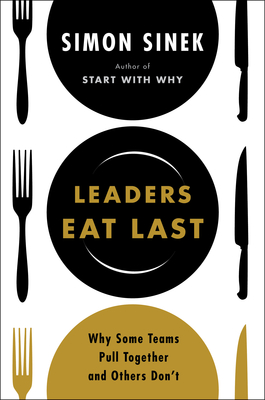 In a nutshell: Sinek sought to demystify the ‘why’ in his first book and has now moved on to the ‘how’ with Leaders Eat Last. This is the follow-up to Sinek’s hugely successfully Start With Why: How Great Leaders Inspire Everyone to Take Action (2009) which was recently recommended by a 2013 graduate of Stanford’s Sloan program. The book considers organizational leadership examples from, not just the corporate sector, but also the military, to discuss how leaders can create and foster an environment in which their employees, and the organization as a whole, can prosper. Wharton management professor, Adam Grant, has selected Leaders Eat Last as a key release for 2014.
Author: Sinek teaches on the specialized master’s program in strategic communications at Columbia University and is an adjunct member of the RAND Corporation - a nonprofit global policy think tank.
Teaser: “Imagine a world where almost everyone wakes up inspired to go to work…”
2. Robert Sutton & Hayagreeva Rao, Scaling Up Excellence (Crown Business, February 2014)
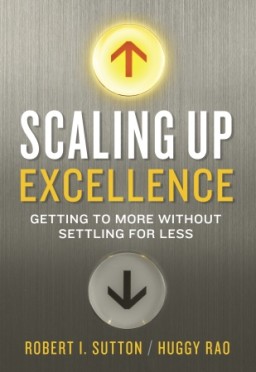 In a nutshell: Also recommended by Adam Grant, Scaling Up Excellence investigates how the best leaders and teams develop, spread, and instill the right growth mindset in their organization. The book draws from a wealth of research and case studies aimed at highlighting how to improve an organization’s effectiveness.
Authors: Both Robert (Bob) Sutton and Hayagreeva (Huggy) Rao are on the faculty at Stanford University. Rao, author of Market Rebels, is a professor of organizational behavior at Stanford Graduate Business School while Sutton is a professor of management science and engineering for its School of Engineering and previously penned Good Boss, Bad Boss.
Teaser: Which corporate mindset is best for you, the singular ‘Catholicism’ or the locally varying ‘Buddhism’?
3. Michael J. Mauboussin, The Success Equation: Untangling Skill and Luck in Business, Sports, and Investing, (Harvard Business Review Press, 2012)
 In a nutshell: The Success Equation was published at the end of 2012 but received multiple votes in a 2013 best book poll of Wall Street analysts, traders and economists conducted by Business Insider. It builds on Daniel Kahneman’s 1973 paper ‘On the Psychology of Prediction’ in exploring the decision-making process. Those who recommend it point out that being able to tell when an outcome has come as a result of skill or whether it is just random, is quite a rare commodity among investors.
The Author: Mauboussin is an adjunct professor of finance and economics at Columbia Business School as well as being the head of global financial strategies at Credit Suisse. He is also chairman of the Board of trustees at the Santa Fe Institute.
Teaser: ‘Much of what we experience in life results from a combination of skill and luck.’
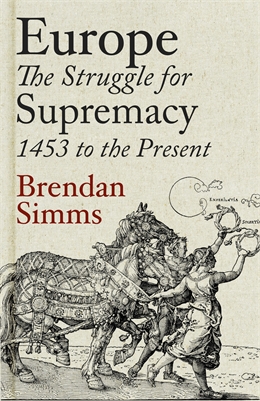 In a nutshell: This historical tome was nominated as a book of 2013 by Constantin Gurdgiev, adjunct professor of finance at
 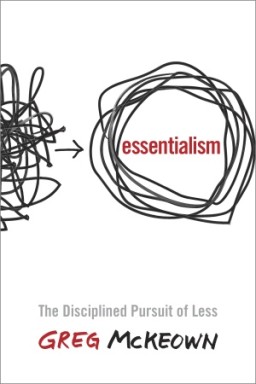 In a Nutshell: Greg McKeown is a proponent of essentialism, a concept that dates as far back as the time of Plato and Aristotle. In
 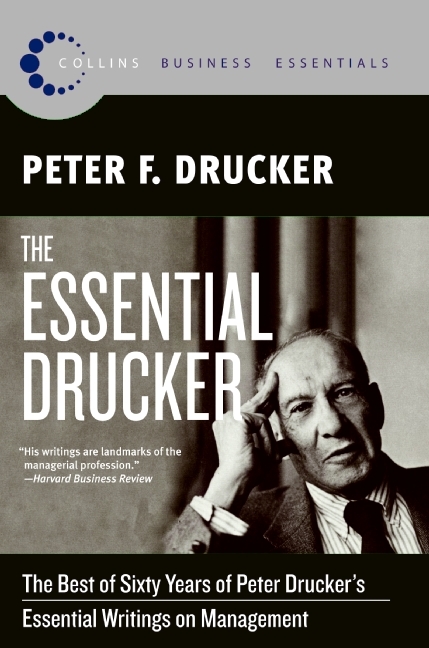 Peter Drucker stands as a preeminent figure in the
  Written while Charles Handy was a visiting professor at London Business School, The Age of Unreason discusses changes taking place in society and the workplace at that time. With the introduction of new technologies for instance, Handy argued that new business approaches were called for and that traditional practices should not be stubbornly clung on to.
 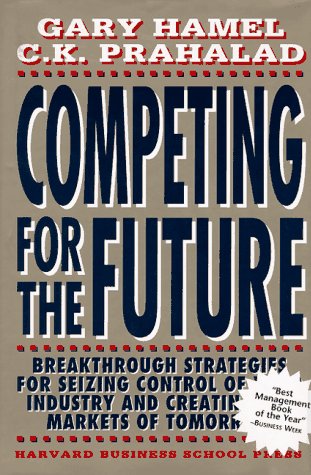 Competing for the Future highlighted the benefits of a company creating a climate in which industry changes could be anticipated rather than merely adapted to retrospectively.
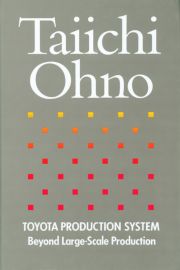 Taiichi Ohno’s Toyota Production System didn’t have the world’s catchiest title but that didn’t stop it from becoming hugely influential and a major precursor of what is known as ‘lean manufacturing’ – a means of avoiding wasting resources on anything that doesn’t ultimately provide value to the consumer.
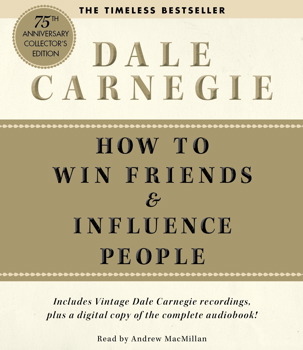 Despite its age, Dale Carnegie’s iconic book still holds value for the way it beheld relationships as the key to success. The basic concept it devised became entrenched in the world of business and its impact still resonates today.








Get closer to your dream programme
Your consent preferences have been set.
Time to start exploring.
Your account has been removed.
You can still browse the site or sign up again once you have parental consent.
Get closer to your dream programme